




Humane Aquatic Euthanasia.
When euthanasia is necessary, every animal deserves a death that is calm, rapid, and free from avoidable pain. SED8 provides a welfare-centred approach that meets the standards of leading animal ethics frameworks.
When Euthanasia Is Necessary.
Euthanasia is an unavoidable aspect of responsible aquaculture, scientific research, and animal husbandry. There are many circumstances in which an operator or researcher may be required to end an animal’s life: at the conclusion of an experiment, during routine sampling of blood or tissue, when removing surplus individuals from a production system, or when the health or welfare of an animal has deteriorated to the point where continued life would involve unacceptable suffering.
Regardless of the reason, the obligation to manage animal welfare does not end with the decision to euthanise. The manner in which death is induced matters — both ethically and increasingly in terms of regulatory compliance. Poorly executed euthanasia that prolongs distress, causes pain, or fails to achieve death quickly and reliably falls short of what is required of responsible operators and is inconsistent with the standards set by bodies such as the World Organisation for Animal Health (OIE) and the American Veterinary Medical Association (AVMA).

What Makes a Euthanasia Method Humane.
A structured pre-transport protocol ensures the sedation is effective and the fish arrive in optimal condition. Follow these five steps for every transport event.

Rapid Loss of Consciousness
The method must render the animal insensible quickly, before it is able to experience pain, fear, or sustained physiological distress.

Painless Induction
The agent or technique used must not itself provoke an aversive response. Methods that cause the animal to attempt escape, exhibit erratic behaviour, or show signs of acute pain at induction do not meet the humane standard.

Minimal Handling Requirement
The process should require as little physical restraint or out-of-water handling as possible in the period leading up to euthanasia. Crowding, netting, and air exposure all provoke significant stress responses prior to induction.

Species & Age Appropriateness
The method must be suitable for the specific species, life stage, and physiological condition of the animal. Dose requirements and physiological responses vary considerably across taxa.

Reliability & Reproducibility
The method must consistently produce the intended outcome when applied correctly. Techniques that sometimes fail to achieve death, or that require multiple attempts, are not appropriate for welfare-sensitive applications.

Operator Safety
The method must consistently produce the intended outcome when applied correctly. Techniques that sometimes fail to achieve death, or that require multiple attempts, are not appropriate for welfare-sensitive applications.
Methods That Are Not Humane.
A number of killing techniques that have historically been used with fish and aquatic animals are now widely recognised as inhumane and should not be used. These methods cause unnecessary pain, prolonged distress, or involve the animal remaining conscious and aware during the dying process.

Asphyxiation in Air
Removing fish from water and allowing them to suffocate is a slow, distressing process that can take many minutes. It is not acceptable as a standalone euthanasia method.

Carbon Dioxide Exposure
CO₂ acidifies water rapidly and has been shown to cause an aversive pain response in fish before unconsciousness is achieved. It does not meet the welfare criteria for humane euthanasia.

Live Chilling or Freezing
Placing a conscious fish in ice slurry or a freezer does not cause rapid loss of consciousness. Fish remain aware and responsive at temperatures well below those that would be tolerable for warm-blooded animals.

Chlorine or Bleach Exposure
Highly caustic chemicals cause severe tissue damage and are acutely distressing. Their use is categorically inhumane and unacceptable.

Flushing Live Fish
Disposing of a live fish via a toilet or drainage system does not constitute euthanasia. It is both inhumane and poses a biosecurity and environmental risk.

Conscious Exsanguination
Cutting the gills or severing the tail of a fully conscious fish to induce blood loss is not acceptable as a primary euthanasia method. It may only be used as a secondary procedure following confirmed unconsciousness.
SED8 as a Euthanasia Agent.
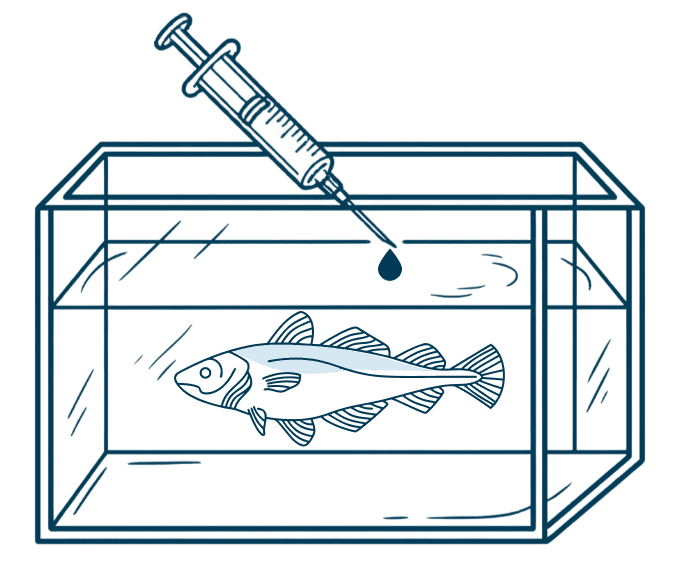
At elevated concentrations, SED8 can be used to induce euthanasia in finfish and crustaceans of any size or age – from recently hatched larvae to large mature adults – and can be applied to individuals or entire groups simultaneously. This scalability makes it suitable across the full range of contexts in which euthanasia is required, from a single ornamental fish in a hobbyist tank to a batch culling operation in a commercial hatchery.
At euthanasia doses, SED8 progressively deepens anaesthesia beyond the threshold of recoverable sedation. The animal first loses equilibrium and ceases active swimming, then opercular movement slows and eventually stops as medullary function collapses. The progression is smooth and without the aversive induction behaviour associated with some other anaesthetic agents – fish do not attempt to escape, display erratic swimming, or show signs of acute distress when properly dosed
Pre-sedation for Sensitive Applications.
In some species or contexts, high-dose induction may produce an initial brief excitation response before unconsciousness is achieved. Where this is considered unacceptable, a two-stage approach is recommended: first sedate the animal at a light dose (5–10 ppm) until it is calm and resting, then introduce the full euthanasia concentration. This approach eliminates any observable stress response entirely and is recommended for research applications requiring strict welfare documentation.
Euthanasia Dose Reference.
Effective euthanasia concentrations vary between species, water temperature, and the physiological condition of the animal. The values below are indicative starting points. A bench trial is strongly recommended for any species not previously assessed, and for critical applications such as ethics-approved research protocols, confirmatory testing should be conducted and documented.
| Species Group | SED8 Euthanasia Dose (ppm) | Notes |
|---|---|---|
| Salmonids (salmon, trout) | 200 – 300 ppm | Pre-sedate at 10–20 ppm if minimising excitation is required |
| Marine finfish | 250 – 350 ppm | Saltwater reduces effective absorption rate; allow adequate induction time |
| Freshwater finfish (warmwater species) | 150 – 250 ppm | Induction typically faster than coldwater species at equivalent doses |
| Larval & juvenile fish (any species) | 150 – 200 ppm | Small body mass increases sensitivity; monitor closely and adjust |
| Crustaceans | 300 – 500 ppm | Higher doses required; confirm death by absence of gill raking for 30+ minutes |
Use the SED8 concentration calculator to verify product volumes for your bath or vessel size. All doses expressed as ppm isoeugenol active ingredient.
Step-by-Step Euthanasia Procedure.
The following protocol applies to anaesthetic overdose euthanasia using SED8. It is suitable for individual animals and for group euthanasia where all individuals are exposed simultaneously in a single vessel.

Prepare the Euthanasia Bath
Fill an appropriately sized vessel with water matched to the animal’s holding conditions – temperature, salinity, and pH should be as close to normal as possible. Sudden environmental changes at this stage compound stress unnecessarily.

Prepare and Add the SED8 Solution
Mix SED8 into a small volume of water to create a stock solution, then distribute it evenly throughout the bath. Allow 2–3 minutes for the solution to fully mix before introducing animals. For the two-stage approach, first dose to the pre-sedation concentration (5–10 ppm) and allow the animal to reach a calm resting state, then top up to the euthanasia target concentration.

Transfer the Animal to the Bath
Move the animal with minimum handling. Avoid prolonged air exposure. For fish already in visible distress or close to death, the step-up sedation approach may be less critical, but should still be applied where possible.

Monitor Progression to Unconsciousness
Observe the animal throughout induction. Normal progression is: reduced responsiveness → loss of equilibrium → cessation of voluntary movement → slowing of opercular movement → cessation of opercular movement. This sequence should occur smoothly and without signs of acute distress.

Apply a Secondary Method to Confirm and Ensure Death (recommended)
Anaesthetic overdose alone can result in deep unconsciousness that may be reversible if the animal is removed from the solution prematurely. To guarantee irreversibility, a secondary technique should be applied once the animal is fully unresponsive. Suitable methods include Iki Jime (brain ablation using a spike), decapitation, or pithing. These procedures do not cause pain as the animal is already fully anaesthetised.

Confirm Death Before Disposal
Do not remove the animal from the euthanasia solution until death has been confirmed. See the confirmation criteria below.

Dispose of the Carcass Responsibly
Carcass disposal must comply with local legislation. Do not dispose of fish bodies in natural waterways, drainage systems, or on open ground where they may be accessed by wildlife. Burial at depth (>30 cm), approved composting, or incineration are the most widely accepted disposal routes. Proper disposal is important to prevent the spread of pathogens to wild fish populations.
Confirming Death in Aquatic Animals.
Confirming that an aquatic animal has died – rather than entered a state of deep but potentially reversible anaesthesia – requires careful observation and, in many cases, the application of a secondary method. Relying on appearance alone is insufficient.
Indicators Used in Combination to Confirm Death
Absence of Opercular Movement (fish) or Gill Raking (crustaceans)
Mix SED8 into a small volume of water to create a stock solution, then distribute it evenly throughout the bath. Allow 2–3 minutes for the solution to fully mix before introducing animals. For the two-stage approach, first dose to the pre-sedation concentration (5–10 ppm) and allow the animal to reach a calm resting state, then top up to the euthanasia target concentration.
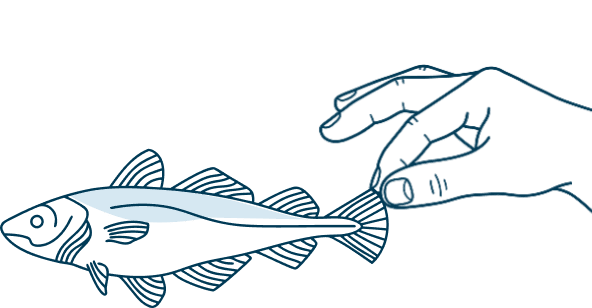
Tail Pinch Response
Applying firm pressure to the caudal fin should produce no withdrawal response. Again, this confirms deep insensibility rather than death on its own.
Secondary Method
Where regulatory, ethics, or animal welfare requirements demand certainty, the application of a secondary physical method – Iki Jime, decapitation, or pithing – to a fully unresponsive animal is the most reliable way to confirm and ensure irreversible death.

Important
All personnel performing euthanasia must be appropriately trained to recognise the behavioural and physiological indicators of pain, fear, distress, deep anaesthesia, and death in the specific species being handled. Competence should be documented where required by institutional or regulatory frameworks.
Contexts Where SED8 Euthanasia Is Used.
SED8 is used for humane euthanasia across a wide range of professional settings. In research and laboratory environments, it provides a welfare-compliant method that satisfies the requirements of animal ethics committees and regulatory bodies such as the EU Directive 2010/63 and equivalent national frameworks. For aquaculture producers, it provides a scalable group euthanasia method for cull events, disease outbreaks, or the removal of surplus stock. For public aquaria and ornamental fish keepers, it offers a gentle, low-stress alternative to the crude methods that have historically been used for individual fish.
In all contexts, the key advantage (other than cost) SED8 offers over alternatives like MS-222 (tricaine) is the absence of an aversive induction response. Fish do not show the erratic swimming, piping, or escape behaviour associated with tricaine at induction concentrations – making SED8 a more welfare-friendly choice when the quality of the animal’s final experience is a priority.
Contexts Where SED8 Euthanasia Is Used.
SED8 is used for humane euthanasia across a wide range of professional settings. In research and laboratory environments, it provides a welfare-compliant method that satisfies the requirements of animal ethics committees and regulatory bodies such as the EU Directive 2010/63 and equivalent national frameworks. For aquaculture producers, it provides a scalable group euthanasia method for cull events, disease outbreaks, or the removal of surplus stock. For public aquaria and ornamental fish keepers, it offers a gentle, low-stress alternative to the crude methods that have historically been used for individual fish.
In all contexts, the key advantage (other than cost) SED8 offers over alternatives like MS-222 (tricaine) is the absence of an aversive induction response. Fish do not show the erratic swimming, piping, or escape behaviour associated with tricaine at induction concentrations – making SED8 a more welfare-friendly choice when the quality of the animal’s final experience is a priority.
Ready to Start
Using SED8?
Contact ADSI for product enquiries, technical support, species consultations or to place an order. Our team can assist with protocol design for any application.