




Fish Broodstock
Welfare.
Protecting reproductive performance and progeny quality by managing stress at every critical handling stage with SED8 sedation.
Why Broodstock Welfare Is Different.
Broodstock animals occupy a uniquely sensitive position in any aquaculture operation. Unlike grow-out fish, where the primary outcome is biomass at harvest, the value of a broodstock individual is measured in the quality and quantity of offspring it produces. This distinction means that stress events in broodstock carry consequences that extend far beyond the individual animal – they directly shape the survival, health, and productivity of an entire next generation.
The physiological mechanisms behind this are well established. When a fish experiences stress, its hypothalamic-pituitary-interrenal (HPI) axis triggers the release of cortisol and catecholamines.
How Stress Undermines Reproductive Output.
The consequences of unmanaged stress cascade through every layer of the reproductive process. The four areas of greatest concern are illustrated below.
Egg Quality & Viability
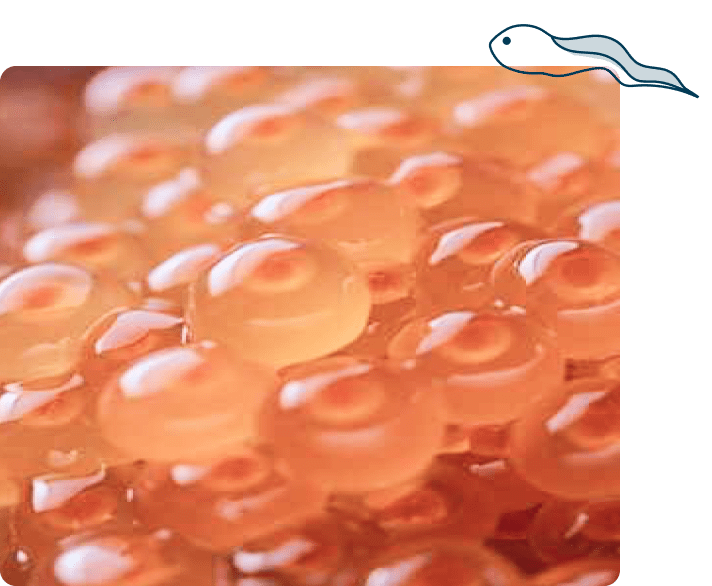
Female broodstock under sustained cortisol elevation produce eggs with lower lipid reserves and reduced membrane integrity. Fertilisation rates fall, and those eggs that are fertilised are more prone to developmental failure.
Sperm Motility & Velocity
Stress hormones suppress testicular function in males, reducing both the proportion of motile sperm and the speed at which they swim. Even moderate reductions in motility can significantly lower fertilisation success, particularly where gamete volumes are limited.
Fecundity
Chronically stressed females produce fewer eggs per spawning event. The body treats sustained cortisol elevation as a signal that conditions are unsuitable for reproduction, and downgrades investment in the ovaries accordingly.
Progeny Survival & Deformities
Parental stress leaves an epigenetic signature in developing offspring. Increased rates of skeletal deformity, abnormal pigmentation, organ abnormalities, and scale defects have all been linked to stress in broodstock parents — alongside elevated early-life mortality and reduced disease resistance in surviving juveniles.

The Core Challenge
Every essential broodstock procedure – handling, tagging, weighing, hormone injection, and manual stripping – is itself a significant stressor. Without active stress management, the very procedures designed to optimise reproductive outcomes may be undermining them.
The Three Critical
Sedation Points.
SED8 is applied at the three stages where the stress burden on broodstock animals is highest. Intervening at each of these points substantially reduces cumulative cortisol load across the breeding cycle.


Broodstock Handling
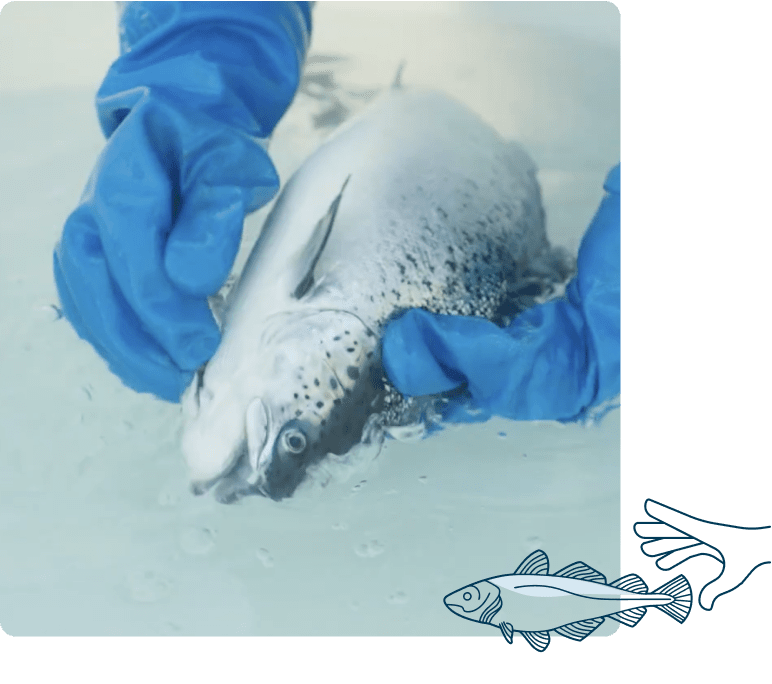
Crowding, netting, and out-of-water handling for assessments, grading, or tagging all provoke a strong acute stress response. SED8 sedation before and during these events reduces cortisol release, limits physical injury, and accelerates return to normal behaviour and feeding once fish are returned to their tanks.

Hormone Injection
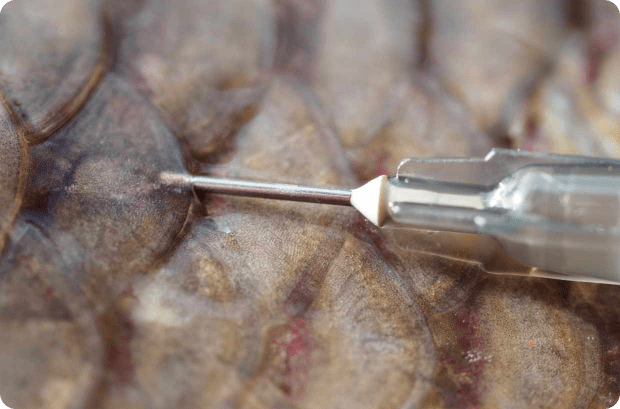
Injection of spawning-induction hormones such as LHRHa or GnRHa requires fish to be individually restrained. In the absence of sedation, the handling involved in this procedure elevates cortisol at a moment when the reproductive axis is particularly sensitive. SED8 suppresses the stress response while the fish is immobilised, protecting the hormonal environment in which the injected compound will act.

Gamete Stripping
Manual stripping -the collection of eggs and milt by external pressure – requires sustained restraint of a fully alert animal. Cortisol released during unsedated stripping can compromise gamete quality within the collection window itself. SED8 sedation keeps the animal calm throughout the procedure, protecting gamete viability and improving fertilisation rates.
Benefits Beyond
Gamete Quality.
The value of SED8 sedation in broodstock management extends beyond the immediate reproductive outcomes.
Safer Handling for Staff
Large broodstock animals can cause significant injury to handlers when they struggle during restraint. Sedated animals are far easier to manage, reducing the risk of needle-stick injuries during injection and musculoskeletal strain during stripping.
Improved Broodstock Survival
Repeated handling over a multi-year broodstock career accumulates stress damage. Reducing cortisol exposure at each intervention preserves immune function and extends the productive lifespan of high-value individuals.
More Consistent Data
sedated fish — biometrics, ultrasound, blood sampling — yield more reliable and consistent data, since the animal’s physiological state at the time of measurement is controlled.
Zero Withholding Period
SED8 clears rapidly via the gills and carries a zero food-fish withholding period in all registered territories, making it safe for use at any point in the production cycle, including in animals destined for harvest after their final breeding season.
Recommended
Procedure.
The following sequence applies to a combined hormone injection and gamete stripping event. For standalone handling procedures, follow steps 1–3 only and omit the stripping-specific steps.
Prepare the Sedation Bath
Fill a suitably sized holding vessel with water from the broodstock tank to minimise temperature and chemistry shock. Prepare a SED8 stock solution and add it to the bath to achieve the target concentration (see dose table below). Allow the solution to mix for 2–3 minutes before introducing fish.
Transfer and Sedate the Broodstock Animal
Net the fish and move it to the sedation bath. Monitor behaviour — the fish should show reduced responsiveness to external stimuli within 3–5 minutes at the recommended dose. It should remain in lateral equilibrium and continue to ventilate normally.
Conduct Biometrics or Health Assessment (if required)
Once sedation is established, this is an ideal opportunity to collect weight, length, and condition data, or to perform an ultrasound scan to assess gonadal development, before proceeding to injection.
Administer Hormone Injection
With the animal sedated and restrained, deliver the hormone dose via intraperitoneal or intramuscular injection according to your protocol. The animal’s suppressed stress response means the hormonal environment at the time of injection is stable and conducive to an effective response.
Return the animal for the induction period
Move the fish to a clean holding tank to complete the hormone induction period. Allow full recovery from sedation before returning to the main broodstock population.
Re-sedate for stripping
At the conclusion of the induction period, return the fish to a fresh SED8 sedation bath. Once sedation is established, collect gametes by gentle manual pressure. The calm, controlled state of the fish during this process minimises cortisol contamination of the collected gametes.
Recover and return
After stripping is complete, transfer the fish to a clean, well-oxygenated recovery tank. SED8 is eliminated rapidly through the gills and full recovery of normal swimming behaviour is typically observed within minutes.
Dose Reference.
The concentrations below are starting-point guidelines for salmonid broodstock. Species-specific optimisation is recommended – contact SED8 technical support for advice on your target species and water conditions.
| Application | SED8 Euthanasia Dose (ppm) | Volume Equivalent |
|---|---|---|
| Routine handling, biometrics & assessment | 5 – 10 ppm | 5 – 10 mL per 1,000 L |
| Hormone injection | 10 – 20 ppm | 10 – 20 mL per 1,000 L |
| Gamete stripping (eggs & milt collection) | 10 – 20 ppm | 10 – 20 mL per 1,000 L |
| Extended out-of-water procedures | 20 – 30 ppm | 20 – 30 mL per 1,000 L |
Always conduct a preliminary species trial before full-scale deployment. Use the SED8 concentration calculator to confirm volumes for your tank or vessel capacity.
A Long-Term Investment in Programme Quality.

The economic case for SED8 sedation in broodstock operations compounds across breeding seasons. Higher fertilisation rates, lower early-life mortality, and a reduction in developmental deformities in each cohort represent meaningful gains in both the number and quality of fish entering the grow-out phase. For selective breeding programmes, where the genetic value of individual broodstock animals is particularly high, reducing the physiological cost of each handling event also extends the productive life of the programme’s most important contributors.
Welfare-accreditation bodies including the ASC and RSPCA increasingly expect documented evidence of stress management practices in broodstock operations. Incorporating SED8 into the breeding protocol provides a straightforward, auditable record of responsible animal management at every critical handling point.
Ready to Start
Using SED8?
Contact ADSI for product enquiries, technical support, species consultations or to place an order. Our team can assist with protocol design for any application.