




Fish Health
Management.
Proactive disease prevention and welfare-centred handling practices — supported by SED8 sedation at every critical stage.
Prevention First.
Effective fish health management is built on preventing problems before they arise. While treatment options exist for most common pathogens, the economic and welfare costs of disease outbreaks — reduced growth, elevated mortality, and costly interventions — make prevention a far more sensible strategy than reactive treatment.
The key pillars of disease prevention are maintaining excellent water quality, providing balanced nutrition, minimising unnecessary handling stress, and keeping the immune system in peak condition. Whenever fish are subjected to crowding, netting, or out-of-water procedures, their immunity is temporarily suppressed. Reducing that suppression through thoughtful management is the single most effective step an operator can take to limit pathogen entry and spread within a population.

Health Checks & Population Monitoring.
Routine health assessments are essential for detecting bacterial, viral, and parasitic threats before they gain a foothold. During a standard health check, a representative sample of animals is examined against a range of welfare indicators — external condition, gill health, behaviour, and internal organ presentation — to build a picture of the overall population’s status.
The challenge is that the handling involved in a health check is itself a stressor. Fish that are crowded, netted, lifted, and examined experience a measurable spike in cortisol, reduced immune function, and an elevated risk of physical injury. Any individual that was incubating a pathogen prior to the check may return to the population in a weakened state, increasing the likelihood of transmission.

SED8 during health checks suppresses the stress response during crowding and examination, protecting both the individual animal and the broader population. Fish that are sedated during assessment recover faster, maintain stronger immunity, and are less likely to become a disease vector when returned to their pen or tank.
Vaccination.
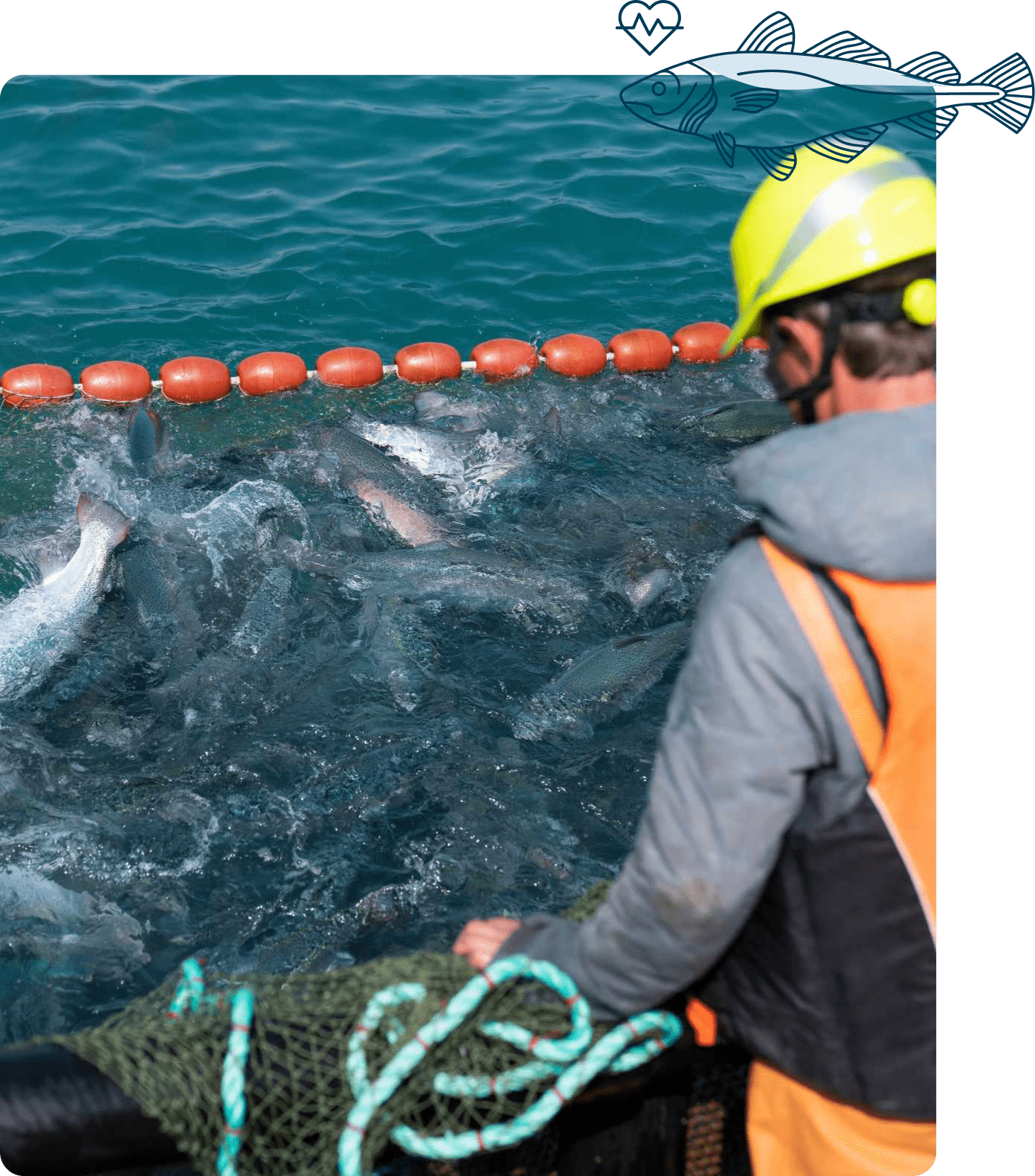
Vaccination remains one of the most cost-effective tools available to aquaculture producers. Most commercially farmed species will receive at least one vaccination during their production cycle, and for salmonids, multi-component injectable vaccines provide protection against the major bacterial and viral threats present in sea water.
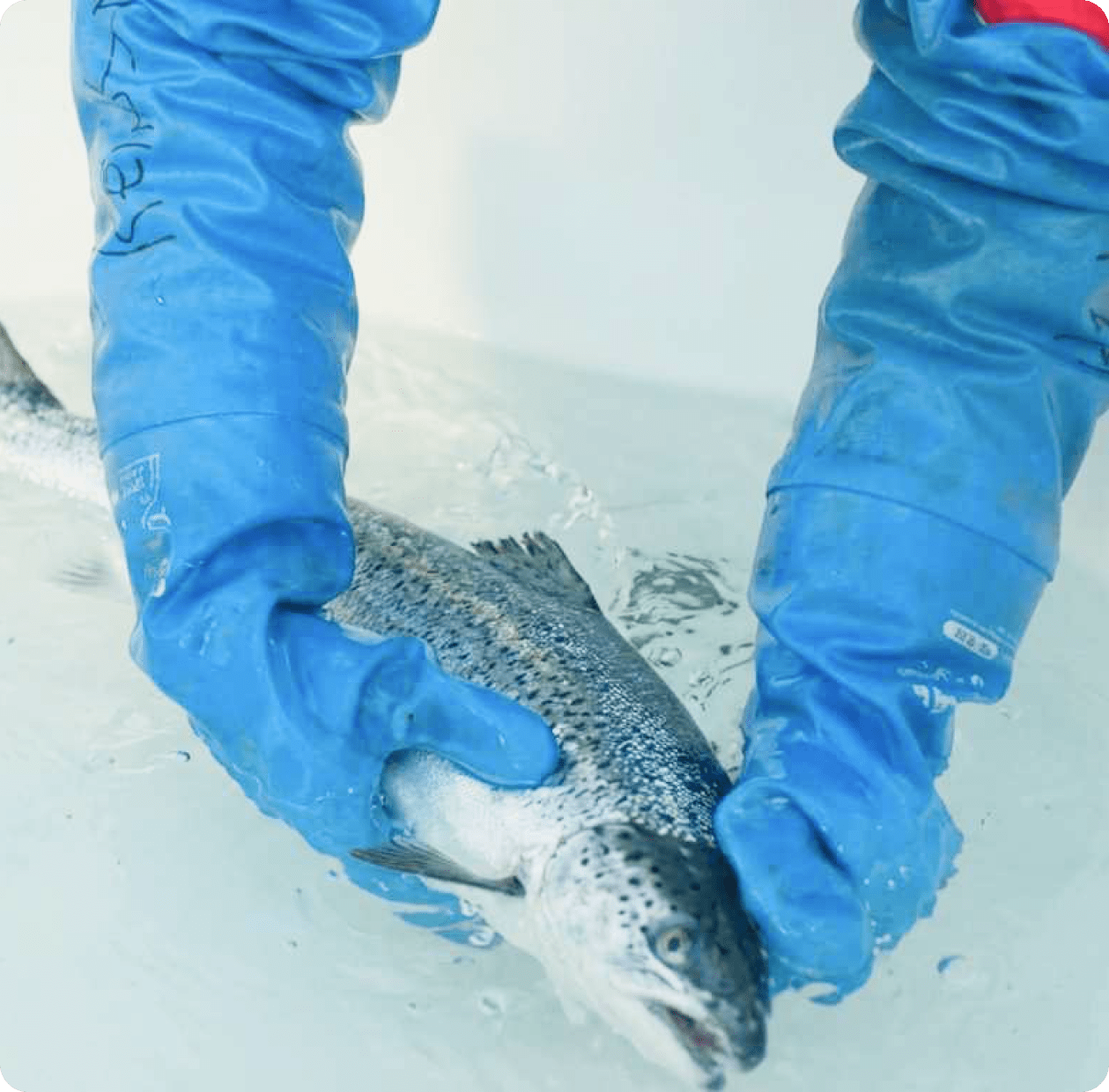
There are three main vaccine delivery routes: injection, immersion, and oral administration. Immersion and oral methods are operationally simpler and cause less immediate handling disturbance, but the immunity they generate tends to be shorter-lived and less robust than that provided by injection. Injection vaccination — delivered into the intraperitoneal cavity or intramuscular tissue — requires fish to be fully immobilised and individually handled, making it the most welfare-sensitive of the three methods.

Reduced Handling Trauma
Sedated fish sustain fewer scale and fin injuries during the injection process, reducing pathogen entry points at a critical immunological moment.

Improved Vaccine Uptake
Lower stress at the time of vaccination means the immune system is in a better state to mount a strong and durable response to the antigen.

Faster Post-Procedure Recovery
Fish sedated with SED8 return to normal feeding and swimming behaviour more quickly, minimising the productive time lost around vaccination events.

Safer for Operators
Calm, sedated fish are easier to handle safely at volume, reducing the risk of needle-stick injuries and improving throughput rates for staff.
Bath Treatments for Parasites & Pathogens.
Chemical bath treatments — including hydrogen peroxide, organophosphates, and freshwater flushes — are widely used to manage sea lice and other ectoparasites. These treatments require fish to be crowded, either within the cage under a tarpaulin or pumped aboard a well boat, before being exposed to the treatment solution for a defined period.
The welfare implications of this process are significant. The chemicals used are inherently stressful to fish physiology, and the crowding required before treatment amplifies that stress considerably. High cortisol levels during treatment have been associated with increased chemical uptake, greater tissue damage, and a higher rate of post-treatment reinfection, since a suppressed immune system cannot mount an effective defence once the treatment ends.
SED8 sedation applied before and throughout bath treatments addresses each of these compounding factors. Published trial data from cage-based treatments show clear reductions in stress hormone release, lower oxygen consumption during treatment, and notably reduced post-treatment mortality rates. Producers who have incorporated SED8 sedation into their treatment protocols consistently report improved survival and growth outcomes compared with unsedated controls.

An Important Practical Benefit
Sedated fish absorb less of the treatment chemical through the gills, reducing the risk of overdose toxicity — particularly relevant as rising pesticide resistance has pushed effective treatment concentrations higher in recent years.
Mechanical Delousing Treatments.
Three mechanical lice removal technologies are in widespread use across the Norwegian and global salmon farming industry: the Thermolicer (warm water), the Hydrolicer (high-pressure water jets), and the Optilicer (laser). All three require fish to be crowded and then pumped into an above-water treatment system before lice are physically removed and the fish returned to the sea pen.
Welfare research into these systems has grown considerably since their introduction. Studies have documented a range of adverse outcomes in untreated fish, including gill haemorrhage, scale and skin loss, degeneration of nasal epithelium, and in severe cases, brain haemorrhage. Mortality rates following mechanical treatment have raised concern among regulators and welfare organisations, and scrutiny of the practice continues to intensify in key producing nations.
SED8 sedation is increasingly used ahead of mechanical treatments to reduce the severity of the stress response during pumping and handling. Calmer fish sustain fewer physical injuries on entry to the treatment system, and the suppression of cortisol release limits the secondary immune suppression that makes treated fish vulnerable to rapid reinfection.
Cage Treatment Protocol with SED8.
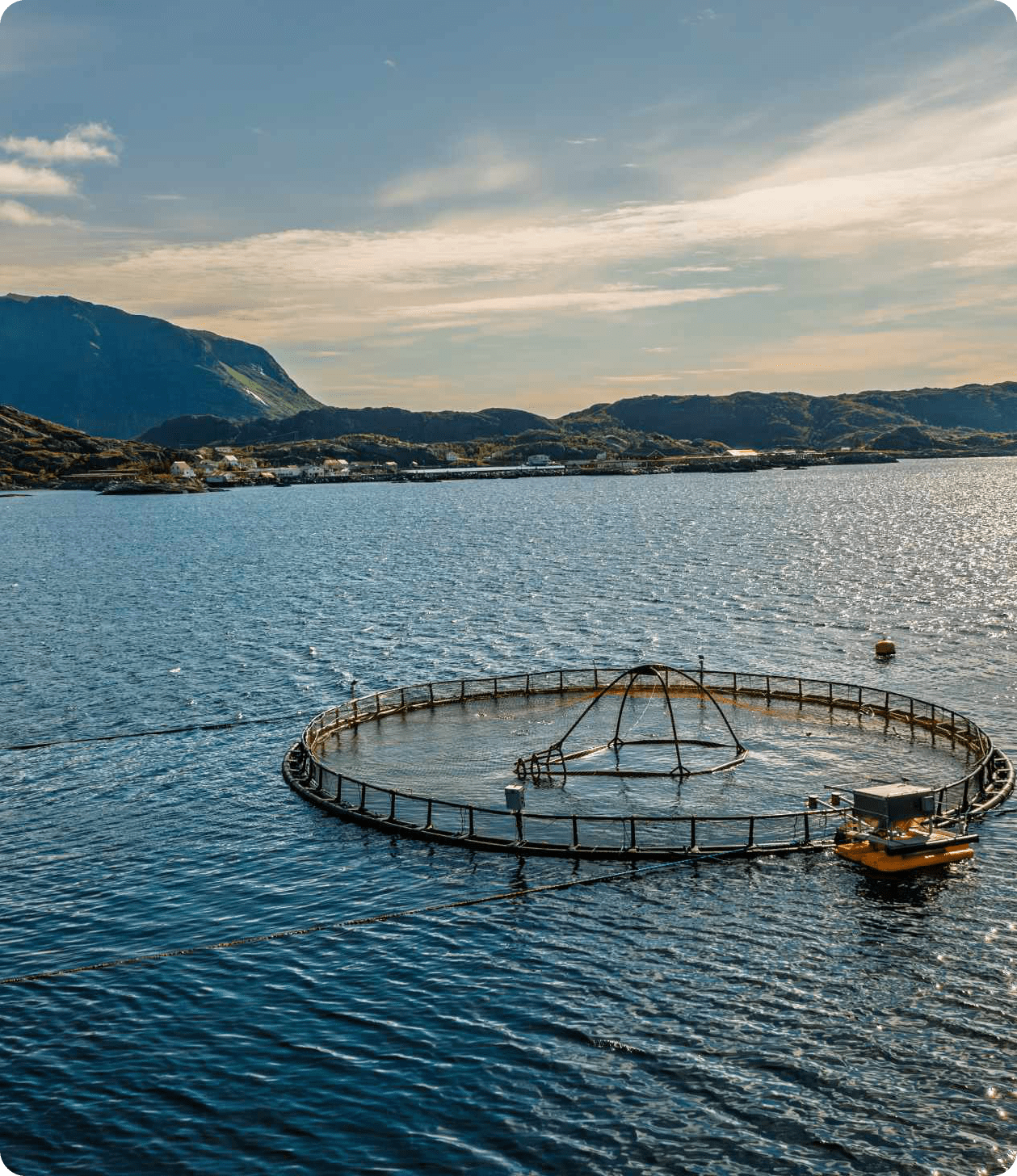
The following protocol applies to in-cage bath treatments using tarpaulin crowding. It can be adapted for well boat operations with minor modifications to dosing volumes.

Set the Tarpaulin as Normal
Prepare Zone 1 as you would for a standard harvest crowding event. Ensure aeration is functioning across all zones before fish are introduced. Confirm that water temperature and salinity match the fish’s holding conditions.

Prepare and Add the SED8 Stock Solution
Mix SED8 with clean water to form a stock solution, then distribute it evenly around the inside of the tarpaulin. Use the SED8 concentration calculator to confirm the correct volume for your cage capacity.

Allow 10–15 Minutes for Sedation to Take Effect
As fish are guided into the crowding area, disperse the SED8 stock solution evenly throughout the zone. Distribute the solution around the perimeter to ensure even mixing. Avoid any pump or turbulence that could add additional stress before sedation takes effect.

Apply the Treatment as Normal
Proceed with hydrogen peroxide, Salmosan, or the appropriate treatment agent according to your standard site protocol. SED8 does not interfere with the activity of these agents.

Open the Tarpaulin and Allow Recovery
Once treatment is complete, open the pen and allow the fish to disperse into clean, well-oxygenated water. SED8 clears rapidly via the gills and recovery is swift.
Dose Reference.
The following concentrations provide a starting point for health management applications. Always conduct a preliminary species trial and consult SED8 technical support for site-specific guidance.
| Application | SED8 Concentration (ppm) | Volume Equivalent |
|---|---|---|
| Health check (crowding & examination) | 5 – 10 ppm | 5 – 10 mL per 1,000 L |
| Vaccination (injection protocol) | 10 – 20 ppm | 10 – 20 mL per 1,000 L |
| In-cage bath treatment | 3 – 5 ppm | 3 – 5 mL per 1,000 L |
| Pre-mechanical treatment sedation | 5 – 10 ppm | 5 – 10 mL per 1,000 L |
Doses are expressed as ppm isoeugenol active ingredient. Use the SED8 concentration calculator to convert to product volumes for your specific formulation.
A Commitment to Welfare.
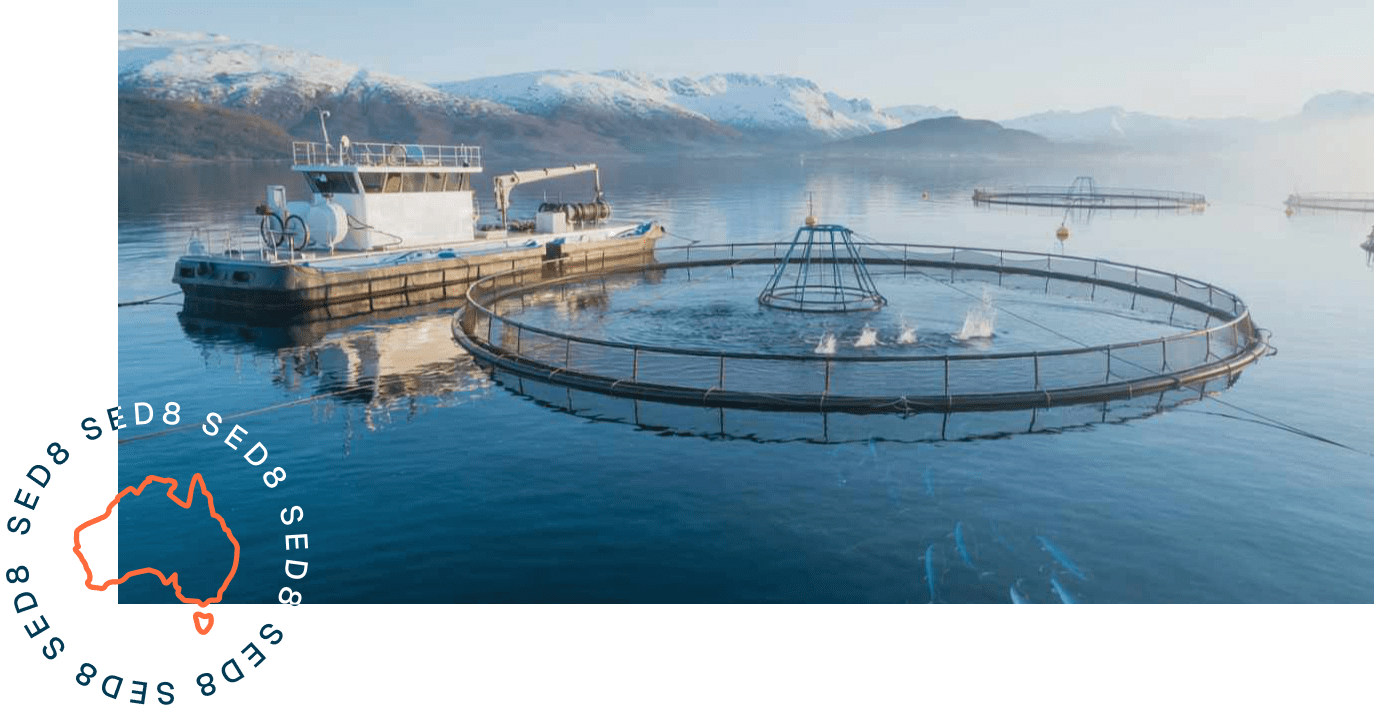
Incorporating SED8 into routine health management is not only a practical decision — it is a visible expression of a producer’s commitment to responsible aquaculture. Welfare standards set by bodies such as the RSPCA, GLOBALG.A.P., and the Aquaculture Stewardship Council (ASC) all place increasing emphasis on documented animal welfare practices. Using sedation during health checks, vaccinations, and treatments provides an auditable record of welfare-conscious handling and supports certification under these frameworks.
Healthier fish — fish that experience less stress across their production cycle — grow faster, convert feed more efficiently, and arrive at harvest in better condition. The welfare case and the commercial case for better health management practices are, in this respect, the same case.
A Commitment to Welfare.
Incorporating SED8 into routine health management is not only a practical decision — it is a visible expression of a producer’s commitment to responsible aquaculture. Welfare standards set by bodies such as the RSPCA, GLOBALG.A.P., and the Aquaculture Stewardship Council (ASC) all place increasing emphasis on documented animal welfare practices. Using sedation during health checks, vaccinations, and treatments provides an auditable record of welfare-conscious handling and supports certification under these frameworks.
Healthier fish — fish that experience less stress across their production cycle — grow faster, convert feed more efficiently, and arrive at harvest in better condition. The welfare case and the commercial case for better health management practices are, in this respect, the same case.
Ready to Start
Using SED8?
Contact ADSI for product enquiries, technical support, species consultations or to place an order. Our team can assist with protocol design for any application.