




Live Crustacean Transport.
From wild capture to live delivery — SED8 sedation protects lobster, crab, and prawn welfare at every stage of the transport chain, improving survival, reducing limb loss, and extending your reach into premium markets.
The Challenge of Transporting Live Crustaceans.
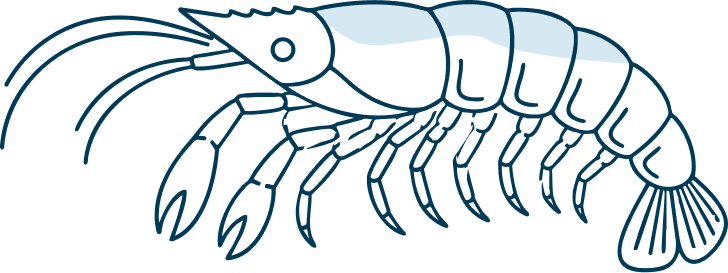
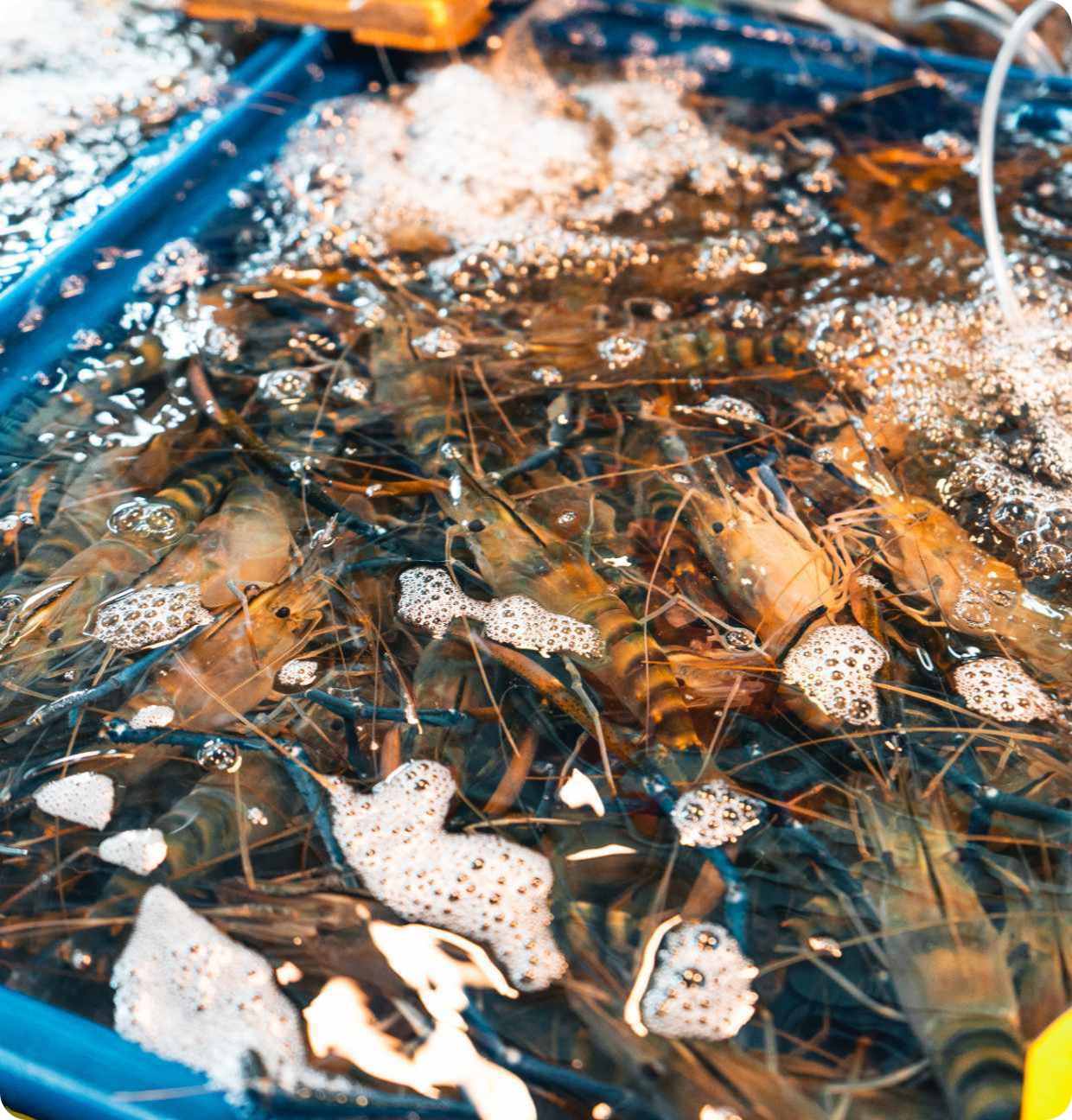
Lobsters, crabs, prawns, and crayfish are typically wild-caught in traps or trawl nets, transferred to onshore holding facilities, graded and sorted, then packed into waterless or semi-dry shippers for air freight to domestic or international end markets. This journey can span several days and thousands of kilometres, and every step in the chain — capture, handling, grading, packing, transit, and arrival — introduces stress that places a cumulative physiological burden on the animal.
Unlike finfish, which can be sedated directly in transport water, crustaceans are most often shipped in a waterless or moist environment, relying on gill moisture rather than submersion to maintain respiration. This removes the option of continuous sedation during the freight leg, making pre-transport sedation — applied during the aquatic holding and packing phase — all the more critical. An animal that enters the shipper in a calm, energy-conserved state will tolerate the dry transit far better than one that arrives stressed and physically depleted.
The consequences of inadequate stress management are visible and commercially significant: elevated mortality on arrival, limb autotomy (the reflexive shedding of legs and claws in response to pain or threat), weakened animals with reduced shelf appeal, and a compressed market window. SED8 sedation intervenes to reduce all of these outcomes at the stages where it can be practically applied.
Why Crustaceans Can Suffer During Transport.
Crustaceans were long assumed to be incapable of experiencing pain — a view that has been progressively overturned by scientific evidence. Decapod crustaceans including lobsters, crabs, crayfish, and prawns possess nociceptors (pain-sensing receptors) distributed throughout their exoskeleton in sensory structures called sensilla, and their central nervous system — while structurally different from that of vertebrates — is organised to process and respond to those pain signals. When subjected to noxious stimuli, crustaceans produce Crustacean Hyperglycaemic Hormone (CHH), a stress hormone that functions analogously to cortisol in fish and mammals.
The behavioural evidence is equally compelling. Crustaceans respond to painful or threatening stimuli by attempting to escape, thrashing violently, and — most distinctively — by casting off their own limbs. This reflexive self-amputation, known as autotomy, is the crustacean equivalent of a fight-or-flight response. A lobster that loses a claw to autotomy during handling or packing arrives at market as a damaged, lower-value product. A crab that has shed multiple legs during transit may be unmarketable entirely.
In recognition of this evidence, several countries — including New Zealand, Norway, Switzerland, and the United Kingdom — have amended their animal welfare legislation to include decapod crustaceans, with requirements for humane handling, transport, and slaughter. This regulatory trend is accelerating globally.

SED8 has Analgesic Properties.
Unlike many aquatic sedatives that merely suppress activity, SED8 is a true anaesthetic — it reduces pain perception as well as behavioural and physiological stress responses. This triple action makes it particularly well-suited to crustacean applications, where pain-driven autotomy is both a welfare concern and a direct commercial liability.
Stress Points Across the Crustacean Transport Chain.
Stress accumulates across multiple handling events between capture and market. Understanding where the stress burden is highest helps identify where SED8 sedation will have the greatest impact.


Capture & Deck Handling
Initial removal from the water and crowding on deck triggers an immediate acute stress response. CHH levels spike within minutes of air exposure. Careful, rapid handling at this stage limits early stress accumulation.

Live Holding & Storage
Tank holding allows partial physiological recovery, but crowding, poor water quality, temperature fluctuations, and repeated disturbance during grading events prevent full recovery between stress events.

Grading & Individual Sorting
Size grading requires individual animals to be lifted, measured, and placed — each event provoking a defensive response. Animals handled repeatedly in a short period accumulate stress that is difficult to dissipate before packing.

Packing into Dry Shippers
Fitting an active, defensive lobster or crab into a shipper box requires restraining or orienting the animal, compressing claws, and positioning legs — all of which provoke autotomy in an unsedated animal. This is the highest-risk phase for limb loss.

In-Transit Vibration & Handling
Road vibration, aircraft movement, and temperature variation during the freight leg continue to stimulate a stress response throughout the journey. Energy reserves depleted before packing are not replenished during transit.

Arrival & Rehydration
Animals that arrive with severely depleted energy reserves and elevated stress hormones are slow to recover on reintroduction to water, and carry elevated mortality risk during the first 24–48 hours post-arrival.
How SED8 Improves Transport Outcomes.
The value of SED8 sedation in broodstock management extends beyond the immediate reproductive outcomes.
Dramatically Reduced Autotomy
Sedated crustaceans do not display the pain-driven defensive responses that trigger autotomy. Animals that are calm when packed retain their full complement of claws and legs — arriving at market in prime, saleable condition.
Higher Survival Rates
Stress hormones suppress testicular function in males, reducing both the proportion of motile sperm and the speed at which they swim. Even moderate reductions in motility can significantly lower fertilisation success, particularly where gamete volumes are limited.
Reduced Metabolic Rate in Transit
Chronically stressed females produce fewer eggs per spawning event. The body treats sustained cortisol elevation as a signal that conditions are unsuitable for reproduction, and downgrades investment in the ovaries accordingly.
Easier, Faster Packing
Parental stress leaves an epigenetic signature in developing offspring. Increased rates of skeletal deformity, abnormal pigmentation, organ abnormalities, and scale defects have all been linked to stress in broodstock parents — alongside elevated early-life mortality and reduced disease resistance in surviving juveniles.
Better Arrival Condition
Parental stress leaves an epigenetic signature in developing offspring. Increased rates of skeletal deformity, abnormal pigmentation, organ abnormalities, and scale defects have all been linked to stress in broodstock parents — alongside elevated early-life mortality and reduced disease resistance in surviving juveniles.
Improved Market Value
Parental stress leaves an epigenetic signature in developing offspring. Increased rates of skeletal deformity, abnormal pigmentation, organ abnormalities, and scale defects have all been linked to stress in broodstock parents — alongside elevated early-life mortality and reduced disease resistance in surviving juveniles.
Application Across Species.
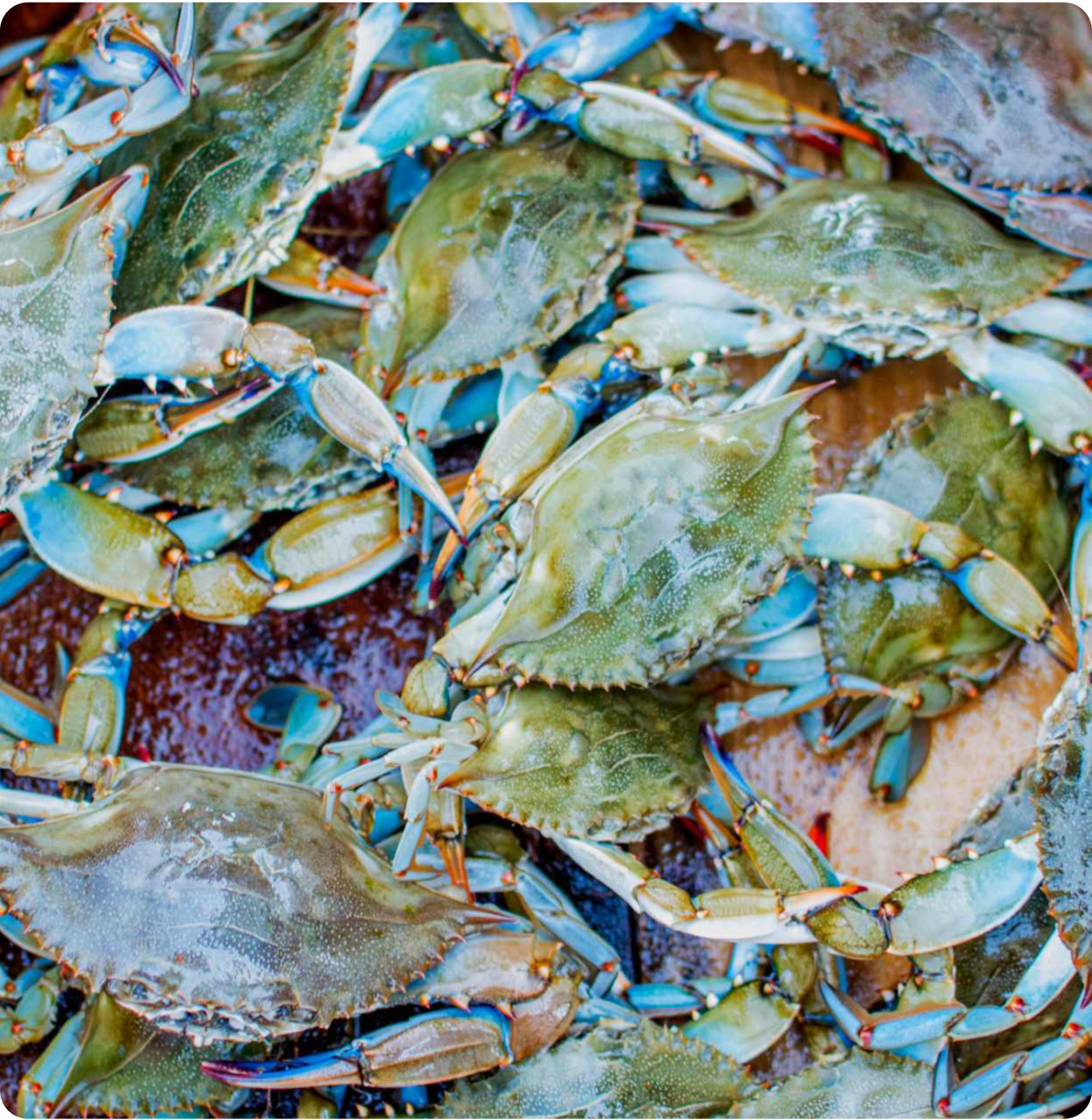
SED8 has been trialled and validated across the major commercially transported crustacean species. Effective doses vary between species due to differences in gill surface area, metabolic rate, and sensitivity to isoeugenol — the active anaesthetic compound in SED8. Water temperature, salinity, and the animal’s physiological condition at the time of sedation also influence induction time and the dose required.
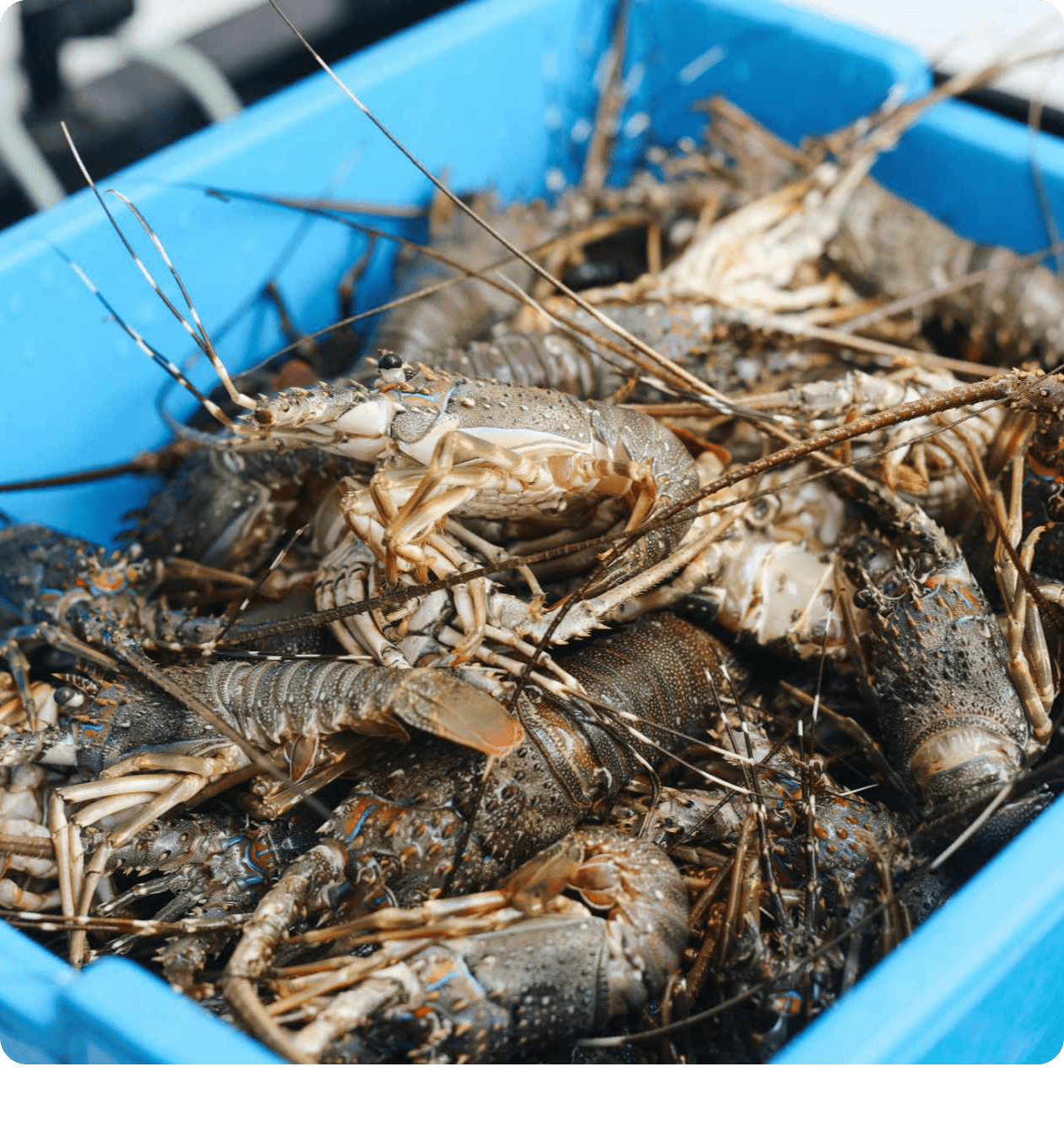
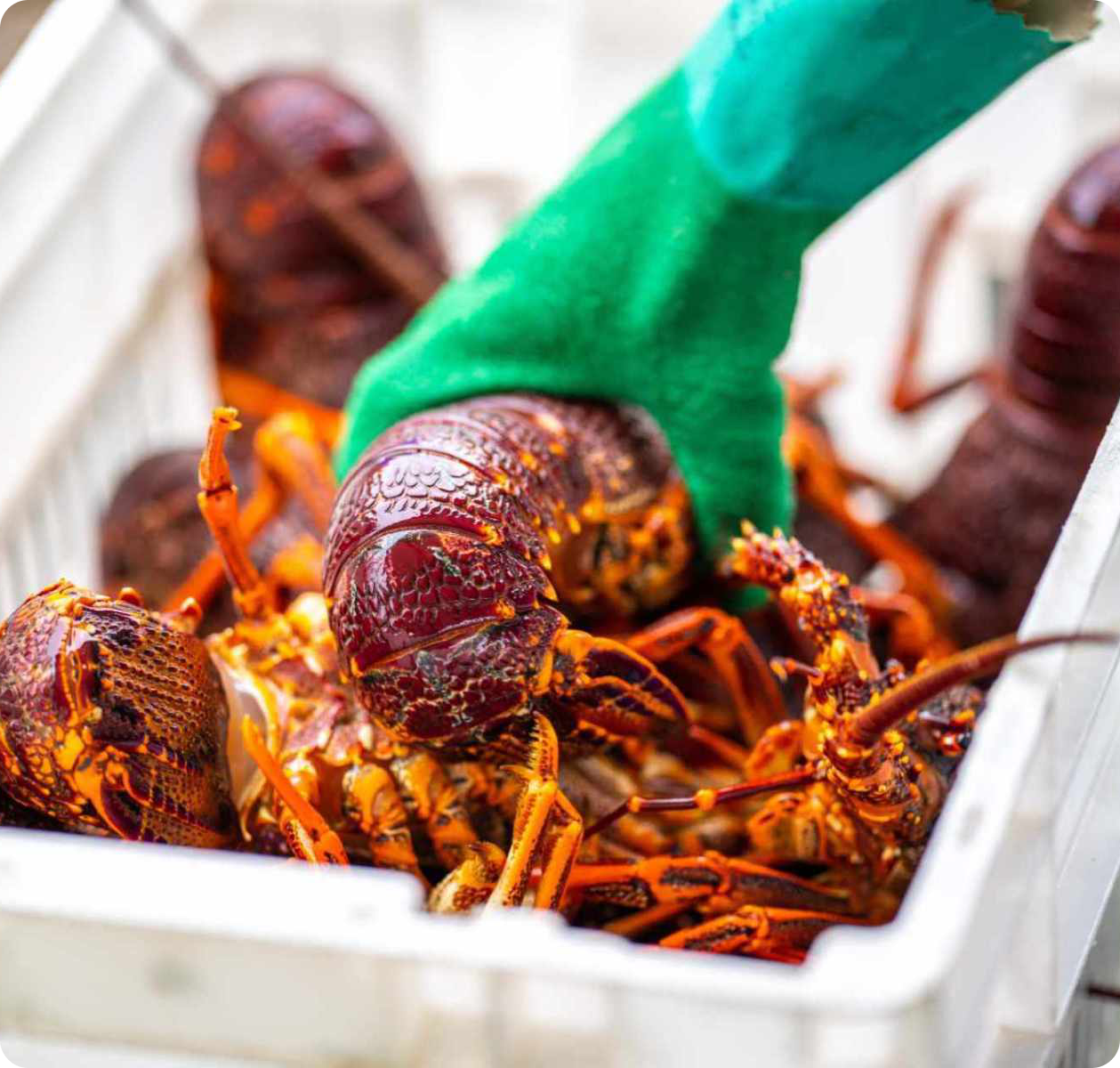
For southern rock lobster (Jasus edwardsii) — one of the highest-value species in the Asia-Pacific live export trade — trial data has shown that animals sedated at 34 ppm reach a handleable state approximately twice as fast as those sedated at 17 ppm. At concentrations between 17 and 68 ppm, lobsters were judged suitable for dry transport. These results provide operators with a well-characterised dose range to work within, and clearly demonstrate the dose-response relationship that should be established for any new species before operational deployment.
Always Conduct a Species Trial First.
Crustacean species vary significantly in their sensitivity to anaesthetic agents. Biological factors including moult stage, recent feeding, body size, and health status all influence how quickly an individual responds to SED8. Run a bench trial at your site conditions across a range of concentrations before committing to a full operational dose.
Sedation vs. Conventional Packing:
A Comparison.
| Outcome | Conventional Packing (Unsedated) | SED8 Sedation Before Packing |
|---|---|---|
| Autotomy (limb loss) | Common — defensive response to handling and restraint | Substantially reduced — analgesic effect suppresses pain-driven casting |
| Packing difficulty | Significant — active animals resist positioning and injure staff | Minimal — calm, compliant animals pack quickly and safely |
| In-transit survival | Lower — depleted energy reserves limit tolerance of dry conditions | Higher — conserved reserves and lower stress hormone levels extend tolerance |
| Post-arrival mortality | Elevated in first 24–48 hrs — recovery slow in stressed animals | Reduced — faster rehydration and physiological recovery on re-immersion |
| Market range | Limited by mortality risk on longer routes | Extended — access to more distant, higher-value markets |
| Product quality at arrival | Higher proportion of damaged, incomplete animals | Higher proportion of complete, vigorous, premium-grade animals |
| Staff safety during packing | Risk of claw injuries and handling strain | Reduced — sedated animals do not grip or resist |
Step-by-Step Sedation and Packing Protocol.
The following protocol applies to waterless or semi-dry air freight of lobster or crab. Adapt tank volumes and SED8 quantities to your facility using the SED8 concentration calculator.
Prepare the Sedation Bath
Fill a suitable tank or tub with water matched to your holding tank conditions — same temperature and salinity. Prepare a SED8 stock solution by mixing the product with a small measured volume of water, then add it to the sedation bath. Allow 2–3 minutes for even mixing before introducing animals.
Transfer Animals to the Sedation Bath
Move individuals or small groups into the bath. Avoid overcrowding — animals should have enough space to settle without stacking on each other, which can restrict gill access and create uneven sedation depth across the group.
Monitor Sedation Progression
Observe animals as sedation develops. Well-sedated animals will cease active movement, relax their appendages, and cease defensive claw extension. They should remain upright with ventilation continuing via gill movement. Sedation is typically established within 5–15 minutes depending on species, dose, and water temperature.
Confirm Handleability Before Removal
Gently lift an individual from the bath. A properly sedated animal will not attempt to grip or extend its claws aggressively, and its appendages will be relaxed and easy to orient. If animals are still active and defensive, allow additional time in the bath or confirm your dose concentration is correct.
Pack into Shippers Promptly
Remove animals from the bath and transfer directly to the shipper. Sedated animals can be oriented and positioned easily without force — legs and claws comply naturally with the packing arrangement. Work efficiently; animals will begin to recover once removed from the SED8 solution.
Keep Shippers Moist and Cool
Maintain gill moisture throughout the transit with appropriate damp packing material — seaweed, damp paper, or purpose-built liner material are all suitable. Keep shippers at the recommended holding temperature for the species. Do not use ice in direct contact with crustaceans, as cold shock can itself provoke autotomy and does not constitute humane sedation.

Rehydrate Gently on Arrival
On arrival, re-immerse animals in aerated, temperature-matched salt water. Avoid sudden temperature changes. Allow adequate recovery time before moving animals into display tanks or proceeding to processing. Monitor for limb loss or signs of distress in the 24-hour post-arrival window and document outcomes to refine future protocols.
Dose Reference.
Effective sedation concentrations vary between species, water temperature, and the physiological condition of individual animals. The table below provides starting-point guidance. Always validate at your site before operational deployment.
| Species | SED8 Sedation Dose (ppm) | Typical Induction Time | Notes |
|---|---|---|---|
| Lobster (rock lobster, spiny lobster) | 17 – 50 ppm | 5 – 20 min | Higher dose halves induction time; trial at your target temp |
| Crab (mud crab, blue swimmer, king crab) | 20 – 50 ppm | 5 – 15 min | Crab species vary considerably — bench trial is essential |
| Crayfish (freshwater) | 10 – 30 ppm | 3 – 10 min | Freshwater species generally more sensitive than marine |
| Prawns & Shrimp | 10 – 25 ppm | 2 – 8 min | Small body mass increases sensitivity; monitor closely |
| Moreton Bay Bug / Slipper Lobster | 20 – 40 ppm | 5 – 15 min | Contact SED8 technical support for confirmed trial data |
All doses expressed as ppm isoeugenol active ingredient. Use the SED8 concentration calculator to confirm product volumes for your bath size. SED8 carries a zero food-fish withholding period in all registered territories — sedated animals can go directly to humane harvest or market holding without a withdrawal period.
The Commercial Case for Welfare-Centred Transport.
Live crustacean export — particularly the premium lobster trade into Asian markets — is a sector where product condition on arrival is everything. A consignment with a high proportion of complete, vigorous animals commands spot prices that a batch with significant mortality and autotomy losses cannot. The economics of SED8 sedation in this context are straightforward: the marginal cost of the sedation step is modest relative to the per-unit value of a prime live lobster, and the improvement in the proportion of animals arriving in Grade A condition typically delivers a return that far exceeds the input cost.
Beyond the immediate revenue case, producers and exporters operating to animal welfare certification standards — or seeking to access markets where humane handling requirements are either regulatory or buyer-mandated — benefit from a documented, auditable sedation protocol that demonstrates responsible animal management at every stage of the supply chain. As consumer awareness of crustacean welfare grows and regulatory frameworks extend to include decapod species in more jurisdictions, operators with established welfare protocols will be better positioned than those adapting reactively.
Ready to Start
Using SED8?
Contact ADSI for product enquiries, technical support, species consultations or to place an order. Our team can assist with protocol design for any application.