



Live Fish Transport.
Protecting fish welfare and maintaining water quality throughout every stage of the transport journey with SED8 sedation.
Why Transport
Stress Matters.
Moving live fish – whether between tanks, facilities, or to distant markets – is one of the most physiologically demanding events an animal can experience. Crowding, netting, pumping, vibration, and changes in water chemistry all combine to trigger a significant stress response.
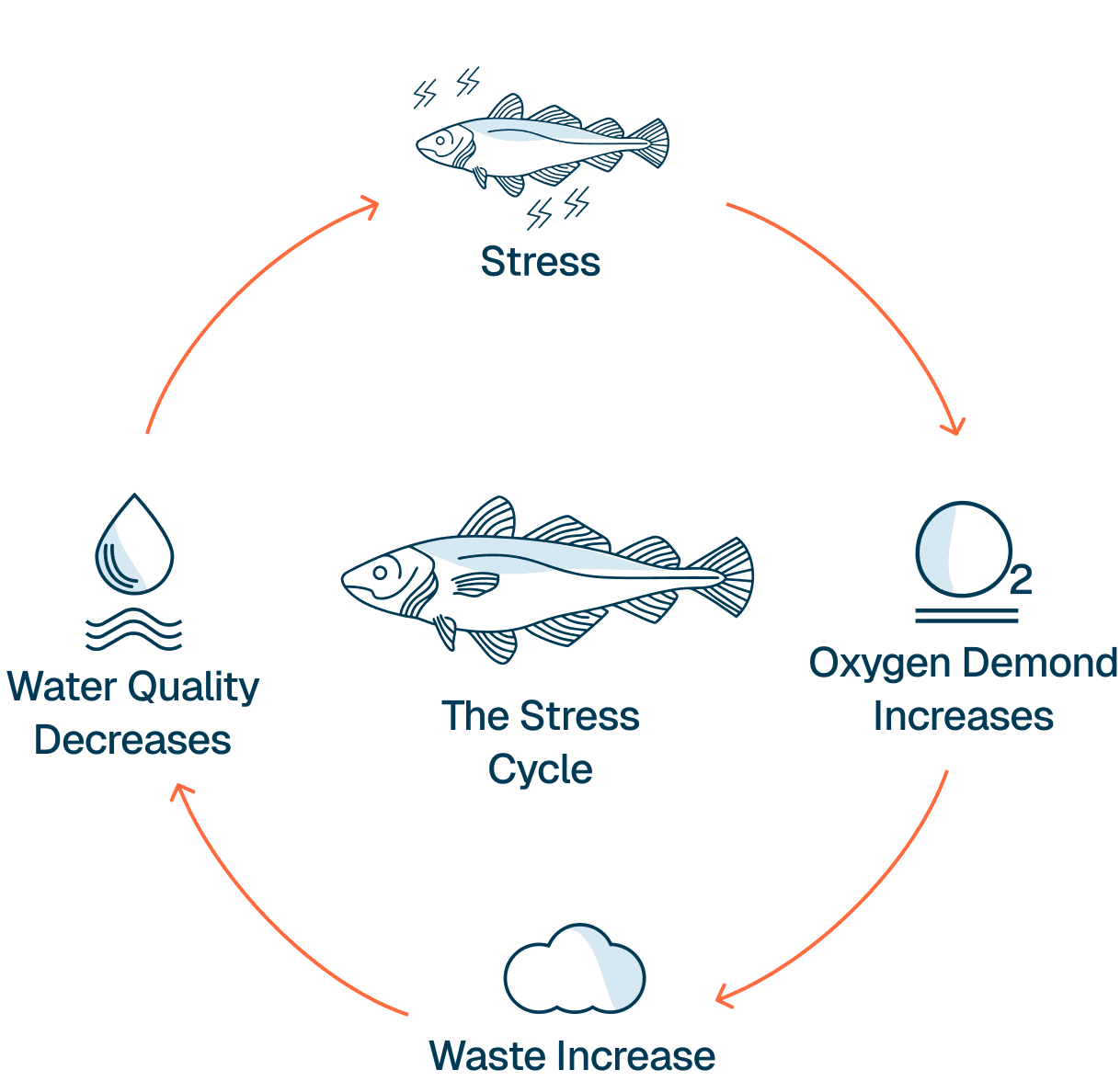
When fish enter a stressed state, their bodies divert resources toward survival: oxygen consumption climbs, waste output increases, and the immune system is suppressed. In the confined environment of a transport vessel, this creates a self-reinforcing cycle – poor water quality compounds stress, which further degrades water quality. Without intervention, the result is elevated mortality during transit and weakened, disease-prone survivors on arrival.
Light sedation with SED8 breaks this cycle before it begins, giving operators greater control over the welfare and condition of their stock.
How SED8 Helps
During Transport.
At a mild sedation dose, SED8 reduces neural excitability without immobilising the fish. Animals remain upright and continue swimming, but they no longer respond with panic or avoidance behaviour to handling stimuli.

Lower Oxygen Demand
Calmer fish burn less oxygen, preserving dissolved O₂ levels in the transport water for longer periods.

Reduced Waste Production
Metabolic slowdown means less CO₂, ammonia, and excess mucus entering the water column during transit.

Safer Crowding & Loading
Sedated fish sustain fewer scale and skin injuries during netting and pump transfer, reducing pathogen entry points.

Better Arrival Condition
Fish that experience less physiological stress arrive stronger, recover faster, and show improved growth and disease resistance.

Longer Safe Transit Windows
Slower metabolism extends the period during which water quality remains within acceptable limits, opening access to more distant markets.

Zero Withholding Period
SED8 is the only aquatic anaesthetic approved for use with food fish at zero withholding — sedated fish can go directly to harvest.
Suitable for Short
& Long Haul.
SED8 has been validated across a wide range of transport scenarios. Brief local transfers – such as moving smolts from a hatchery to a sea cage – benefit from the reduction in loading stress alone.
For extended journeys exceeding 40 hours, such as live-fish shipments to international markets, the sustained reduction in metabolic rate is critical to maintaining acceptable water conditions throughout the entire journey.
Approved for food fish.
SED8 carries a zero withholding period in all registered territories. Derived from natural plant extracts, it is biodegradable and will not bioaccumulate in tissue or the environment.
Recommended
Dose Ranges.
The appropriate SED8 concentration depends on the intended application, species, and duration of transport. Always conduct a preliminary species trial before full-scale deployment.
| Application | Concentration (ppm) | Volume Equivalent |
|---|---|---|
| Pre-loading sedation (crowding & netting) | 5 – 10 ppm | 5 – 10 mL per 1,000 L |
| In-transport maintenance dose | 1 – 5 ppm | 1 – 5 mL per 1,000 L |
Use the SED8 concentration calculator to verify dose volumes before application. Contact your local distributor for species-specific guidance
Preparing for a
Transport Event.
A structured pre-transport protocol ensures the sedation is effective and the fish arrive in optimal condition. Follow these five steps for every transport event.

Run a preliminary dose trial
Test a small group of fish at several concentrations between 2 and 10 ppm. Observe behaviour over at least 10 hours. Fish should maintain equilibrium and swimming motion but show no avoidance response to handling.

Prepare your stock solution
Mix SED8 with a measured volume of clean water to create a concentrated stock. This makes it easier to dose the transport vessel accurately and consistently.

Sedate prior to crowding and loading
Add the pre-loading dose to the holding area before netting begins. Allow adequate time for sedation to take effect before handling commences.

Maintain dose during transit
Add a lower maintenance concentration to the transport vessel. Monitor dissolved oxygen and top up aeration if levels drop below 80% saturation.

Allow recovery on arrival
Transfer fish to clean, well-oxygenated water. SED8 clears rapidly and fish recover quickly without residual effects.
Transport Methods Supported
SED8 is compatible with all standard live-fish transport configurations, including aerated insulated tanks on road vehicles, recirculating transport units with CO₂ scrubbing and chilling, sealed oxygen-charged bags for air freight, and well boats for marine finfish operations. The sedation protocol may differ slightly depending on the method – contact SED8 technical support for guidance tailored to your setup.
Ready to Protect
Your Stock?
Contact ADSI for product enquiries, technical support, species consultations or to place an order. Our team can assist with protocol design for any application.